
In modern defense operations, where thousands of weapons are issued, transported, and returned daily, accuracy and accountability are mission-critical. Traditional, paper-based systems — where quartermasters manually log weapon numbers during issue or return — simply cannot match the scale, speed, or precision required by today’s armed forces.
Enter RFID Armory Management Systems — a new standard for military logistics that leverages automation to deliver real-time visibility, reduce human error, and enforce full chain-of-custody compliance.
Understanding RFID in a Military Context
RFID (Radio Frequency Identification) technology uses small tags embedded into weapons, magazines, or containers. RFID readers at armory gates, racks, or checkpoints detect each tag’s unique ID.
Unlike barcode systems, RFID does not require direct line-of-sight. The system scans weapons automatically — even through sealed cases or racks — enabling rapid, contactless tracking of hundreds of items in seconds.
The Flow of Operation: How RFID Streamlines Armory Management
Let’s walk through the lifecycle of a typical military armory operation using NexGenIoT’s RFID-enabled WeaponTracker system.
Weapon Registration and Tagging
Each weapon — from rifles and sidearms to heavy ordnance — is fitted with a durable RFID tag encoded with its serial number and specifications.
All related data (type, maintenance record, issued officer, status) is stored in a centralized database, linking physical assets to digital records.
Automated Issuance Process
When soldiers queue to draw their weapons before deployment, RFID gateways installed at the issue counters automatically detect the tags as they pass through.
- The system records which officer takes each weapon and the exact time of issuance.
- The officer’s ID badge/CAC cards or biometric verification confirms authorization.
- The database updates in real time — no manual entry required.
Result: The system issues hundreds of weapons in minutes without paperwork while maintaining a complete digital audit trail.

In-Field Tracking and Real-Time Awareness
Once deployed, RFID continues to play a vital role in in-base situational awareness.
For extended visibility, RFID can integrate with IoT sensors, Bluetooth beacons, and GSM/GPS modules, providing multi-layer tracking:
- RFID monitors weapons within base perimeters.
- GPS tracks those issued for field operations or transport.
- Cloud-based dashboards give commanders live status on all active weapons.
For example, during a base inspection, the system can instantly highlight any weapon unaccounted for — long before a manual audit would.
Weapon Return and Reconciliation
Upon return from the field, soldiers simply pass through the RFID gate again.
The system automatically detects all returned weapons and marks them as received in the database.
If a weapon is missing, unregistered, or overdue for maintenance, the system immediately flags it.
The quartermaster can view outstanding items, see who last checked them out, and trigger alerts for retrieval or investigation.
Practical Example:
During a deployment exercise, soldiers check out 400 rifles in under 10 minutes and fully reconcile them on return with 100% accuracy and zero manual input. Tasks that once required hours of cross-checking now complete instantly.
Maintenance, Cleaning, and Inspection Integration
The RFID system is not limited to issuance. Integrated with NexGenIoT’s maintenance module, it also manages routine cleanings, inspections, and repair schedules.
Weapons due for service are automatically flagged, and technicians receive alerts for upcoming or overdue tasks.
When a weapon is serviced, the system records details like:
- Technician’s ID
- Parts replaced
- Service duration
- Final condition
These logs feed directly into the asset’s digital profile — maintaining complete lifecycle visibility from manufacture to retirement.
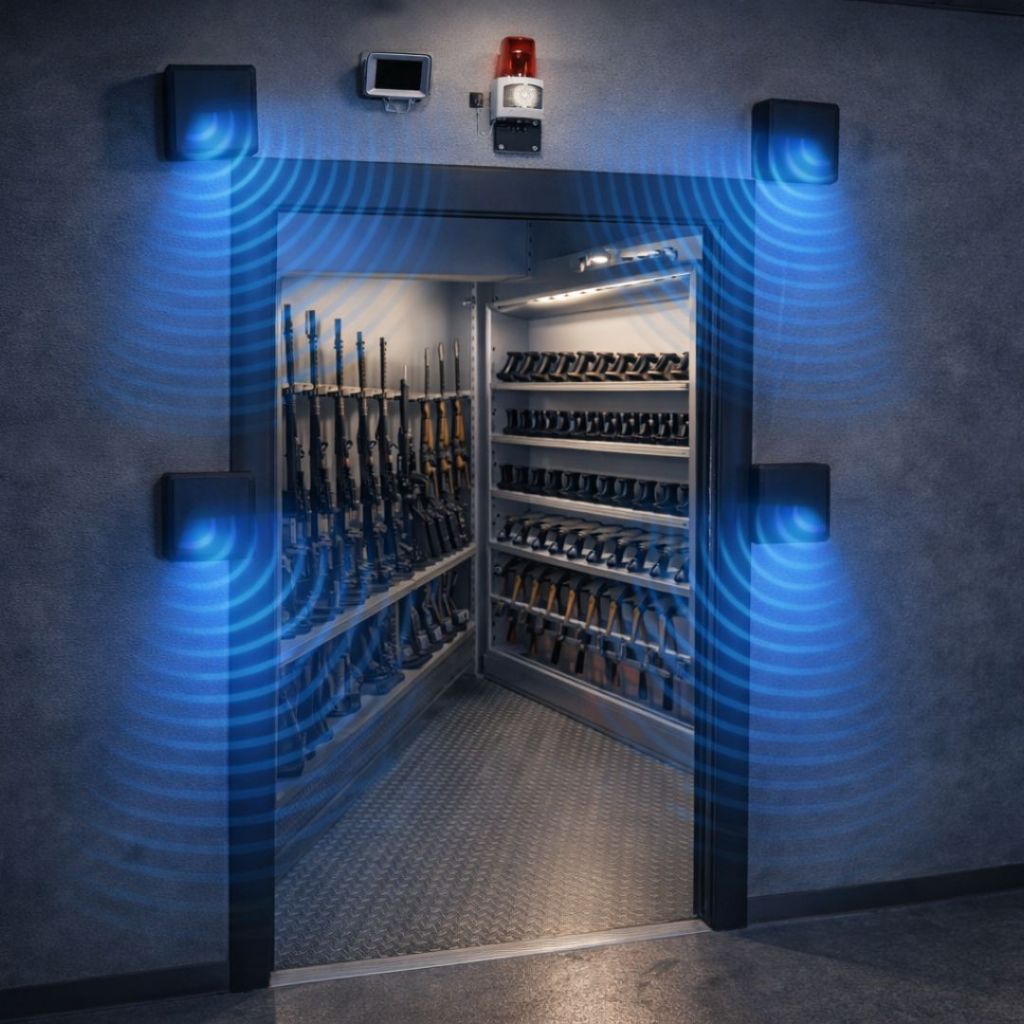
Security Enhancements and Unauthorized Movement Detection
RFID armory systems add a powerful layer of physical security.
When installed at entry and exit points, antennas detect any weapon movement.
If a weapon crosses a threshold without a valid issue record, the system triggers instant alerts, activating:
- Alarm horns or sirens
- Flashing light indicators
- CCTV camera capture linked to the alert
- Automated email/SMS notifications to supervisors
This creates a closed security loop, making unauthorized removal virtually impossible.
Weapon Visibility through IoT Integration
Modern deployments combine RFID with IoT and satellite-based tracking for a multi-dimensional view of weapon movement:
- RFID ensures control inside the armory and base zones.
- IoT sensors track weapon condition, tampering, or discharge events.
- GPS + GSM extends visibility beyond the base — ideal for convoy, vehicle, or aircraft-mounted weaponry.
The system synchronizes all data to a cloud dashboard that authorized commanders, logistics officers, and auditors can access across multiple bases or international deployments.
The Strategic Impact: From Bottleneck to Battlefield Efficiency
In traditional systems, issuing or auditing weapons could take hours, slowing deployments and increasing error rates. RFID automation eliminates these inefficiencies.
This shift not only saves time but also improves mission readiness.
- 90% faster issuance and reconciliation cycles.
- 100% verifiable weapon accountability.
- Real-time visibility and compliance reporting.
- Stronger audit defense during inspections or investigations.
For defense logistics teams, RFID-based armory management transforms what was once a manual bottleneck into a strategic, data-driven advantage.